
Reviewed · MARKETS
Tour around the Central Market of Malaga
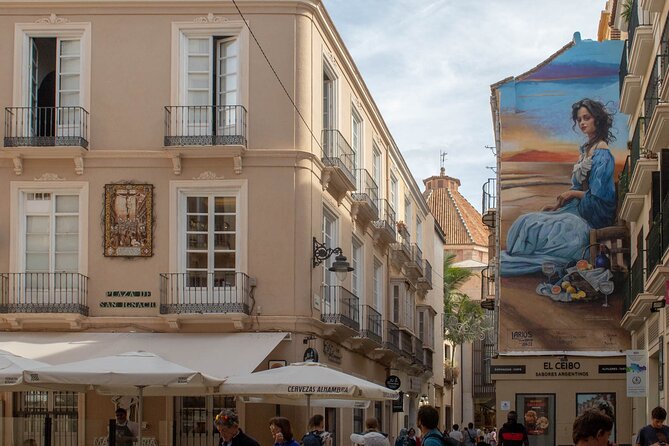
This Central Market of Malaga walking tour is interesting because it links the city’s everyday shopping streets with places tied to Holy Week, flamenco, and local rituals. You get a guided route through neighborhoods that most first-timers skip, with quick stops that help you read Malaga like a local.
I like the mix of sights, from church façades and classic squares to the famous Pasaje de Chinitas and the glass-and-steel energy around Mercado Central de Atarazanas. And I especially like the human touch, one guide named Lourdes is praised for being warm and prepared, which matters when you are walking and learning in motion. One consideration, it is a 2-hour walking tour, and food and drink are not included, so plan water and decide where you want to stop for a snack after.
Key highlights you will feel on the walk
- Guadalmedina River views and Holy Week links at the start, with sights tied to local brotherhood tradition
- Bookstores, fans, flamenco dresses, and Muslim-era street textures along the older lanes around Compañía
- Plaza de la Constitución coffee culture plus the cathedral area as your visual anchor
- Pasaje de Chinitas as a long-running flamenco corridor
- Calle Larios as the 19th-century commercial spine, with details you might miss alone
- Atarazanas Central Market where you connect Muslim walls and old shipyards to today’s stalls
Entering Malaga through the Central Market and the streets around it
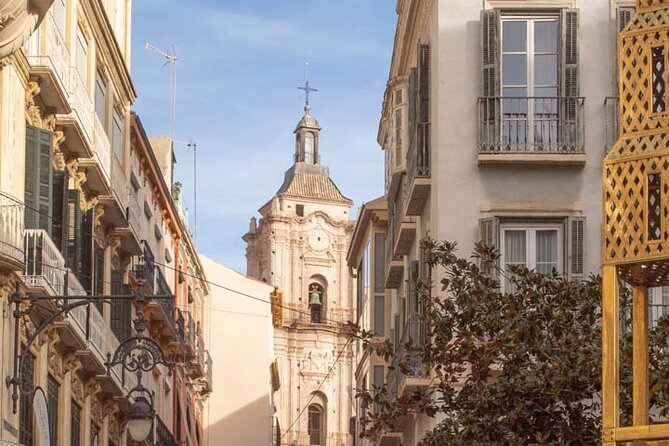
If you like travel that feels practical, not museum-only, this tour is built for you. You start near the Guadalmedina River and move through the historic center on foot, with a guide giving context in short, easy chunks. Instead of treating Malaga like a checklist of monuments, it treats the city like a living set of neighborhoods.
That approach matters, because Malaga rewards small observations. You will notice how old religious life shows up in architecture. You will spot the way commerce and leisure gather around squares. You will also see how flamenco culture lives in narrow corridors and side streets, not just on a stage.
The end point, Atarazanas Central Market, is a great finish because markets are where a city’s daily rhythm becomes obvious. Even if you only have 2 hours, ending at the market helps everything click: the streets you walked, the old walls and shipyard setting, the food culture that sits behind the sights.
A few more Malaga days worth comparing
- Malaga: The Ultimate Tapas Workshop with Market Visit
★ 4.9 · 108 reviews - Malaga Market Food Tour: Tapas, Drinks, and Local Flavors
★ 5.0 · 78 reviews - Private Malaga: Alcazaba, Museum, Market, Cathedral & Picasso
★ 5.0 · 28 reviews
Price and what $17.80 buys you in real value
At $17.80 per person, this is not expensive for a guided, small-group walk that runs about 2 hours. You are paying for two things: local storytelling and time saved. Malaga can be confusing if you try to self-guide every stop, especially when the guide ties each corner to a specific tradition, festival, or architectural detail.
Also, it is taxes included, and you get a professional local guide. With group size capped at 20 travelers, you are less likely to get stuck in the back row during quick orientation moments.
The best value is the way the route is layered. You do not just pass by famous names. You learn why certain streets matter, why certain buildings were built, and how the market area evolved.
Logistics that make the walk easier than you expect
You meet at Pl. Enrique García-Herrera, 20 in Malaga’s Distrito Centro and finish at C. Atarazanas, 9, at the main entrance of Atarazanas Central Market. The tour uses a mobile ticket, so you do not need to print anything.
Timing is straightforward, it is about 2 hours. Because the stops are short, you get momentum, not a slow, stretched-out loop. The route also runs through areas with nearby public transportation, including a metro stop at Atarazanas and bus stops close to different points in the city.
Most importantly, the tour is described as accessible to all types of physical ability or age, and service animals are allowed. If you are planning around walking time and crowds, this is a reasonable pace for many people.
Stop-by-stop: what you will actually see and why it matters
Same stretch of coast, a different kind of day:
- Málaga: Alcazaba and Roman Theatre Guided Tour With Entry
★ 4.8 · 5,792 reviews - From Malaga and Costa del Sol: Gibraltar Tour
★ 4.4 · 4,483 reviews - Malaga: Teatro Flamenco Malaga Live Flamenco Show
★ 4.7 · 4,254 reviews - From Málaga: Ronda+Setenil de las Bodegas with Little Train
★ 4.6 · 4,115 reviews
Starting at Plaza Enrique García-Herrera, with river views and Holy Week context
The tour begins at Plaza Enrique García-Herrera, 20, where you can orient yourself quickly. The guide points out views of the Guadalmedina River and the Puente de los Alemanes, so you understand what landscape Malaga sits on and why it developed where it did.
From there, the route brings in faith and local tradition connected to Holy Week. You will pass by churches and brotherhoods linked to that fervor, including the Church of Santo Domingo. Even from outside, churches like this act as cultural landmarks. You learn how the city’s celebrations shape daily street life and community identity.
You also pass by the Unicaja Museum of Popular Arts and Customs, and the idea here is not just to say it exists. It is tied to the city’s archaeological and ethnographic past, designed as a space to understand how people lived.
Mapas y Compañía: old streets, modern touches, and shopfront storytelling
Next you head into the area around C/ Compañía and the nearby lane textures the guide highlights. This is where Malaga’s mixed timeline feels real. You will see traditional street influences and then notice contemporary creativity tucked inside.
A standout detail is an original bookstore that becomes a fantasy-like stop, because it shows how commerce can be cultural expression. You may also see customs and religious imagery in storefront displays, including items like fans, wicker crafts, and flamenco dresses.
The guide also connects the old and the new, including how an avant-garde façade, mentioned in the route, fits into the city’s older fabric. This part of the walk is a good reminder that Malaga is not frozen. It evolves block by block.
A neo-Gothic church stop: built in 1920 and arranged in three naves
You will pause at a neo-Gothic church built in 1920, designed by architect Fernando Guerrero Strachan. The layout is basilica style with three naves.
This is the kind of stop that helps your eye. Even if you cannot identify every architectural term, you learn to look at plan layout and façade style as part of the city’s ongoing development. The timing also works well because it breaks up the street-walking rhythm.
Plaza de la Constitución: the square that teaches you how locals move
Plaza de la Constitución is one of those stops that can feel touristy if you rush it, which is exactly why the guided explanation helps. The guide covers why the square has had a name change over Spain’s political and social shifts, so the plaza feels like a historical document you are standing inside.
You will also hear about the Fountain of the Three Graces. The tour mentions the mythical Café Central, now disappeared, which gives you a sense that places you can no longer visit still matter in Malaga’s memory.
And then comes the very Malaga part: coffee culture. Expect the guide to talk about the wide variety of coffees in Malaga, with a mention of a cloud effect related to condensation in the sky. The takeaway is practical. Knowing the local coffee references makes the city feel less like a script you do not understand and more like a place with daily rituals.
Finally, you get majestic views of the Cathedral and guidance about the square’s “arteries,” meaning nearby streets and the leisure spots that feed Malaga’s social life.
Pasaje de Chinitas: a flamenco corridor with duende energy
You then move to Pasaje de Chinitas, a passage recognized for flamenco and for the way singing and dancing artists developed their duende in the bars and taverns along the passage.
This is one of those stops where the setting explains the art. A narrow corridor forces closeness. It changes how sound travels. It encourages small performances to feel intimate instead of staged.
Even if you are not a flamenco superfan, this stop helps you understand why flamenco in Malaga is tied to street spaces, not only ticketed shows.
Calle Larios: the commercial spine with 19th-century dates you can remember
Next is La Calle Larios, described as the city’s main street built between 1887 and 1891. The guide frames it as the nerve center of the historic center, where the commercial and entertainment side of Malaga has long gathered.
You will pass or look at places like Casa Mira and century-old pharmacies where master formulas are still served. The walking point here is not the name-dropping, it is the lesson: commercial streets are also cultural archives. The street itself shows how daily life and craftsmanship lived side by side.
The route also includes references to views of the old entrance to the sea, which adds a geography layer you can feel in your brain even after you leave.
Plaza de Félix Sáenz: a square plus the old store building that anchors it
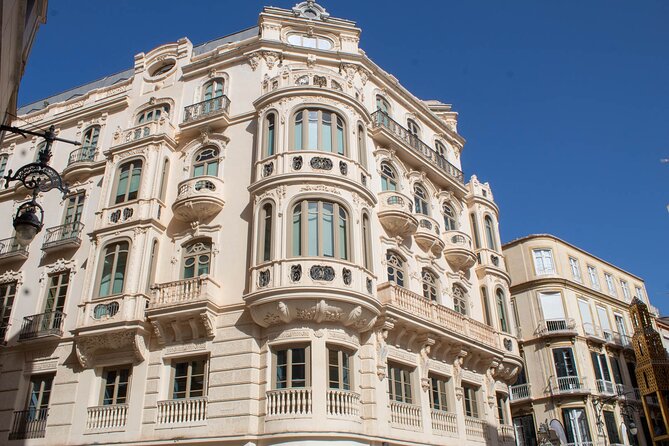
At Plaza de Félix Saenz, the focus is the façade of the old Almacenes de Félix Sáenz. The tour treats it as a symbol of Malaga’s cultural and economic life, then connects it to its renovation process.
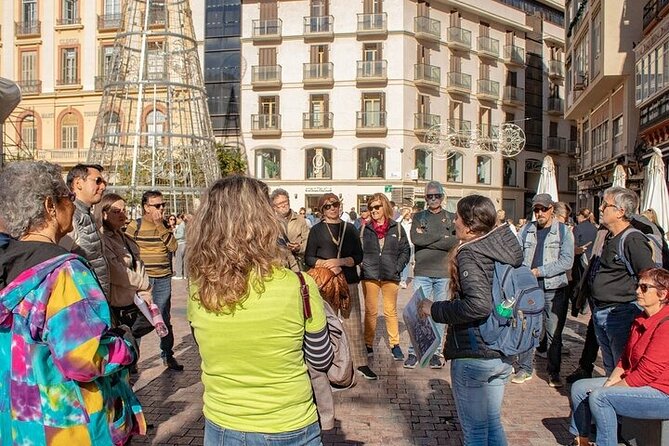
You also experience the square in motion. The guide points out how it acts as a meeting place for shopping and leisure and how dining happens here too. Even on a short stop, that “how locals use it” context makes the plaza stop being just a backdrop.
You will also find mention of sculptures and magical corners that are not visible if you just walk past.
Edificio Sagasta at Sagasta Street: built in 1925, a corner shaped like a keel
Then you hit a quick architecture moment at Edificio Sagasta at Sagasta Street 5, on the corner of Herrería del Rey Street. Built in 1925, the building is described as a narrow house that forms a kind of keel.
This is short, but it matters because it teaches you a way to look at streets. When buildings “turn the corner,” they often create a viewpoint effect and show how designers handled space in dense urban layouts. You end up noticing details you would normally ignore.
Mercado Central de Atarazanas: Muslim walls, shipyards, and today’s stalls
The final segment brings you to Mercado Central de Atarazanas. The guide explains what to look for in the products and sales stands inside the market facilities, then zooms out to the setting.
This is where the stop becomes more than food shopping. The tour connects the market’s location to Muslim walls that once surrounded the city and to old shipyards on the same site. In other words, you are eating or browsing in a place that used to have a very different purpose.
The guide also connects what you see now with traditional and avant-garde businesses in the surrounding streets, so the market feels like the present day version of a long-used urban hub.
The tour ends at the main entrance of the market on C. Atarazanas, 9, which is a good practical choice because it helps you continue your day from a clear landmark.
The guides’ storytelling style: short stops, clear links, and real place meaning
A big part of why this tour works is the way it ties each stop to something you can remember. A church becomes not just a building but a hint of Holy Week tradition. A square becomes a map of social life and coffee culture. A flamenco passage becomes a reason sound and performance feel different in that space.
One guide named Lourdes shows up in the standout praise, with notes about her warmth and preparation. That kind of guide energy is what turns a walking tour from “I saw things” into “I understand what I saw.”
Even without special phrasing, the route gives you a mental chain, street, culture, architecture, daily life, and then finally the market.
Practical tips for enjoying it without rushing
Since you will walk between multiple points in the historic center, I recommend wearing comfortable shoes and planning a water stop for later, because food and drink are not included. If you are the type who likes to slow down for photos, bring a bit of patience. The tour keeps moving, but it is short enough that you do not feel trapped.
Also, take advantage of the small-group setup. Ask quick questions when the guide is explaining the connection, especially around the festival and flamenco links, those are the moments that make the city feel specific rather than generic.
Who should book this Central Market walking tour?
This is a strong fit if you want:
- A guided introduction to central Malaga without doing everything on your own
- Flamenco and Holy Week interest, or just a desire to understand why these traditions shape the city
- A practical route that ends in a market, so you can keep exploring right after
It might be less ideal if you want a heavy focus on inside museum time. This is a walking tour with exterior and street-level stops, plus market browsing at the end.
Should you book it?
Yes, I think you should book it if your goal is to get oriented fast, then leave with real place knowledge. For $17.80, you are buying a guided route that connects Malaga’s neighborhood textures, religious traditions, flamenco setting, and a meaningful finish at Atarazanas Central Market.
If you are already comfortable navigating the historic center and you only care about the market itself, you might not need a full tour. But if you want the city to feel understandable, not just pretty, this is a smart use of a couple of hours.
FAQ
How long is the Malaga Central Market walking tour?
It lasts about 2 hours.
What is the price per person?
The price is $17.80 per person.
Is a guide included?
Yes. A professional local guide is included, and all taxes are included too.
Do I need to bring food or drink?
Food and drink are not included.
Where do I meet the tour, and where does it end?
You start at Pl. Enrique García-Herrera, 20, and you end at C. Atarazanas, 9 at the main entrance of Atarazanas Central Market.
Do I get a mobile ticket?
Yes, the tour uses a mobile ticket.
Is the tour accessible, and are service animals allowed?
The tour is described as accessible to all types of physical ability or age, and service animals are allowed.
What is the cancellation policy?
You can cancel for free up to 24 hours in advance for a full refund. If you cancel less than 24 hours before the start time, the amount paid is not refunded.
Fresh options around Malaga
- Night theatrical visit to the English cemetery★ 4.2 · 5 reviews
- e-Bike (Self-Guided) & Winery tour – 20km Easy★ 5.0 · 6 reviews
- e-Bike (Self-Guided) Setenil Circular – 41km Easy★ 5.0 · 11 reviews
- 2h E-bike tours+1day extra in Malaga★ 5.0 · 28 reviews
- Wine & Tapas tour by electric bike (e-bike) including Ronda pickup (full day)★ 5.0 · 34 reviews
- Ronda Private Full Day Wine Tour★ 4.5 · 8 reviews
- Yacht ride in Puerto Banús★ 5.0 · 26 reviews
- Wine, Tapas & Lake Zahara by e-bike incl Ronda pickup (full day)★ 5.0 · 4 reviews
Markets, compared.
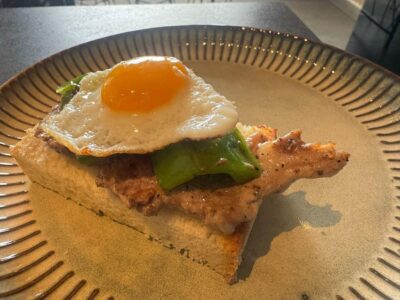
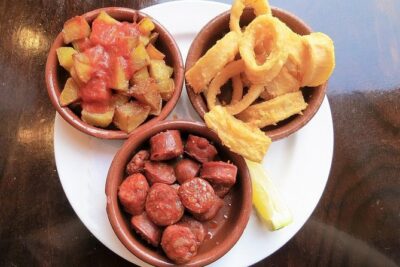
Malaga Market Food Tour: Tapas, Drinks, and Local Flavors
Read our review →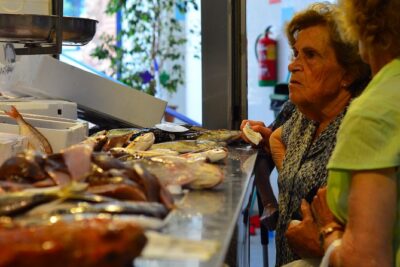
Taste of Marbella Food & Market Small Group Tour
Read our review →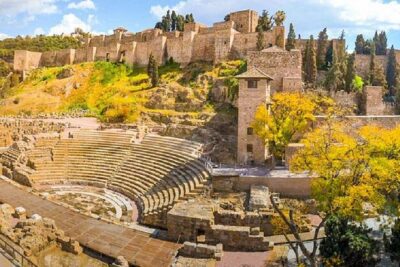
Private Malaga: Alcazaba, Museum, Market, Cathedral & Picasso
Read our review →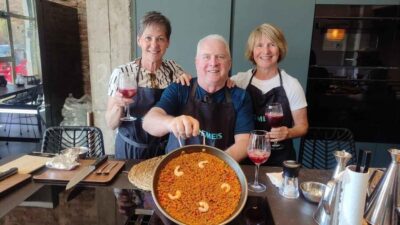
Paella and Sangria Cooking Class with Market Visit
Read our review →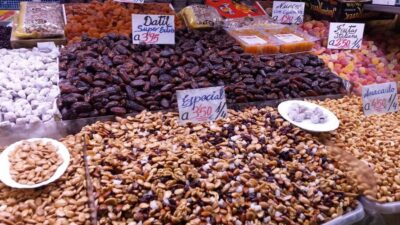
Tapas Tour Paella and Malaga market with Official Guide
Read our review →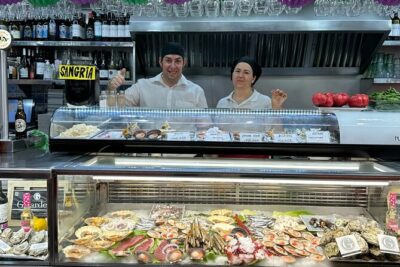
Malaga Food Walking Tour with Atarazanas Market Visit
Read our review →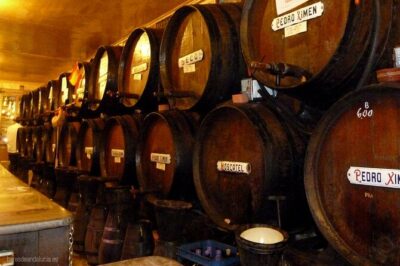
PREMIUM TAPAS TOUR: Paella, Market Tastings, and Winery
Read our review →Browse the lists this tour appears in